Gynecomastia

Gynecomastia is the condition of overdeveloped or enlarged breasts seen in males. This can occur at any age and may be a result of obesity, genetics, hormonal changes, or the use of certain drugs. Even if it is not a health issue, this condition can cause significant psychological distress in men.
Gynecomastia surgery is a highly successful surgical procedure developed to reduce the breast size and restore firmer, masculine chest contours. During surgery, excess fat and glandular tissue is removed. In extreme cases, removing excess skin and repositioning the areola may also be necessary.
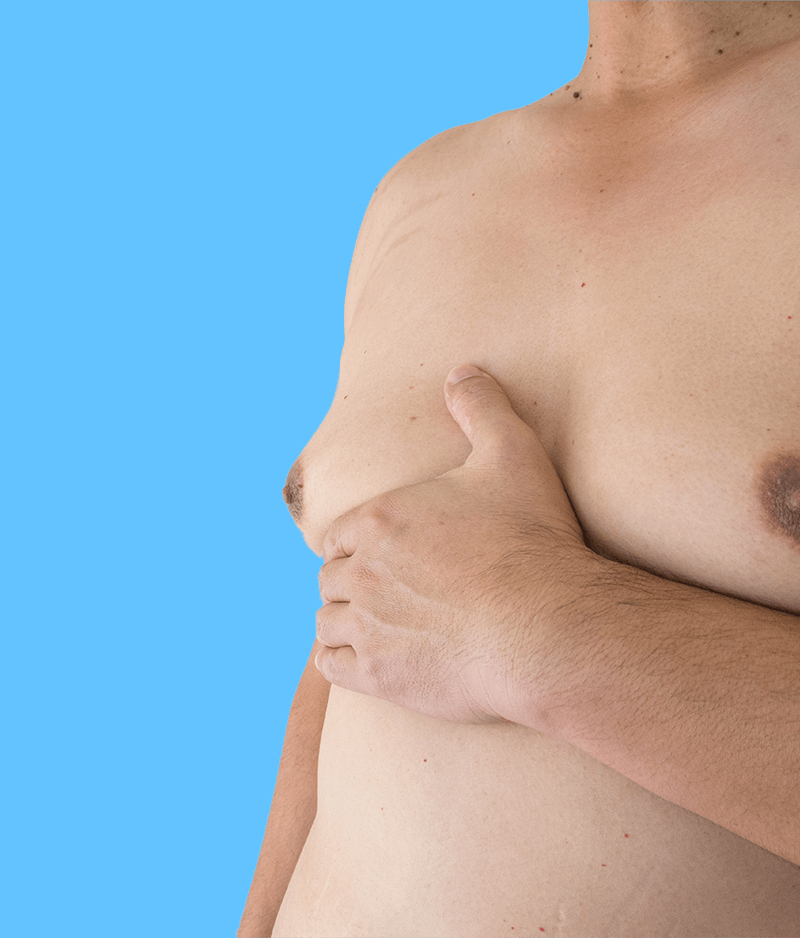
Different approaches for different types of gynecomastia
Gynecomastia surgery may be right for you if you are healthy and bothered by enlarged breasts

Understanding what to expect during gynecomastia surgery
General anesthesia or local anesthesia with sedation is administered for your comfort during the surgical procedure. Your surgeon will decide the best option for your specific case.


Small incisions are made (within armpit, around areola, or below breast crease). Excess fat and glandular tissue are removed through these incisions. The chest contours are sculpted to achieve a natural masculine appearance.
Used when larger amounts of glandular tissue or excess skin need removal. Incisions are typically made around the areola or within natural chest creases. The areola may be reduced and nipple repositioned if needed.

What to expect after your gynecomastia surgery
Stitches, dressings, and possibly drainage tubes will be in place. Some soreness and swelling is normal but minimal. Pain medication will help control discomfort. Compression garment may be recommended.
Can return to work or school (timing depends on procedure type). Swelling begins to subside. Continue wearing compression garment if recommended. Avoid strenuous activities.
Most swelling has subsided. Can gradually resume exercise after 2 weeks, vigorous exercise after 3 weeks. Final results visible after 3-6 months as swelling completely resolves.
As with any surgery, gynecomastia surgery carries some risks